
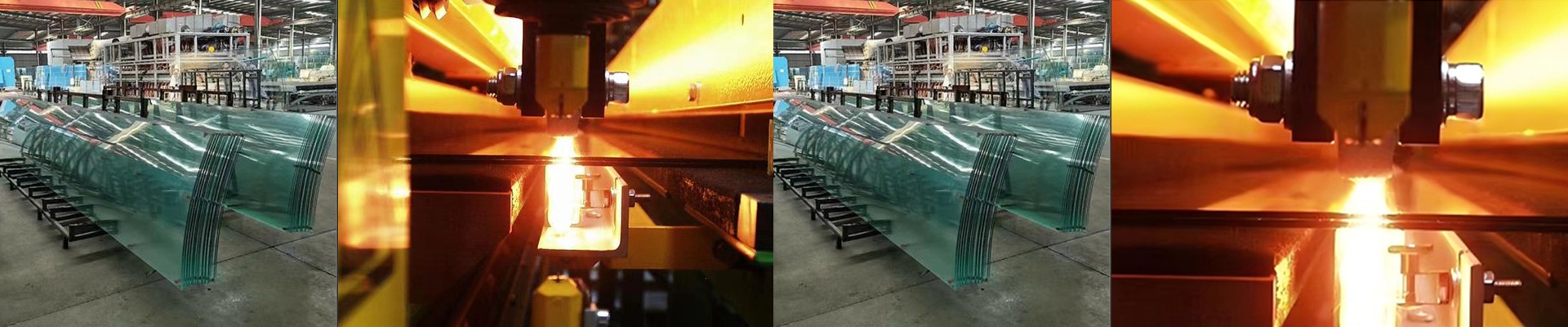
On a tempering line, the heating section is where you either make yield or throw it away. If the glass hits the quench with uneven temperature, you’ll see optical distortion, edge waves, or worse—thermal stress fractures. If the ramp is too slow, throughput drops and the energy bill climbs. We built these wholesale glass heating lamps to solve that exact bottleneck on the floor. What matters, technically We spec these NIR heating lamps for repeatable, controlled heat delivery. You’re looking at 2–3 kW/m² power density for fast response, a heating rate of 120–180°C/min to keep pace with high-speed lines, and ±2% temperature uniformity across the target zone. The short-wavelength energy penetrates the glass surface with minimal convection, so you heat the body faster while the surroundings stay cooler. Quartz envelopes take the thermal shock, and output stays stable from cold start to steady-state. In tempering and bending, the whole game is consistent surface temperature before forming or quenching. These lamps bring the glass up quickly, cut soak time, and tighten the window between heating and the next step. The payoff is fewer scrap sheets, lower gas or electricity per square meter, and a cycle time you can plan around. They also drop into existing heating zones as a direct replacement for aging infrared modules—no need to rework the line layout. Installation is straightforward, but alignment is where people get tripped up. Reflectors have to be positioned so you don’t get hot spots or shadowing at the edges, and the lamp needs to match conveyor speed and glass thickness. Plan for proper cooling airflow and clean, dry electrical connections. Humid or dusty conditions will shorten lamp life. Keep the quartz clean and control the local environment. And make sure the voltage and connector specs line up with your equipment—mismatches on the line will cost you downtime.