
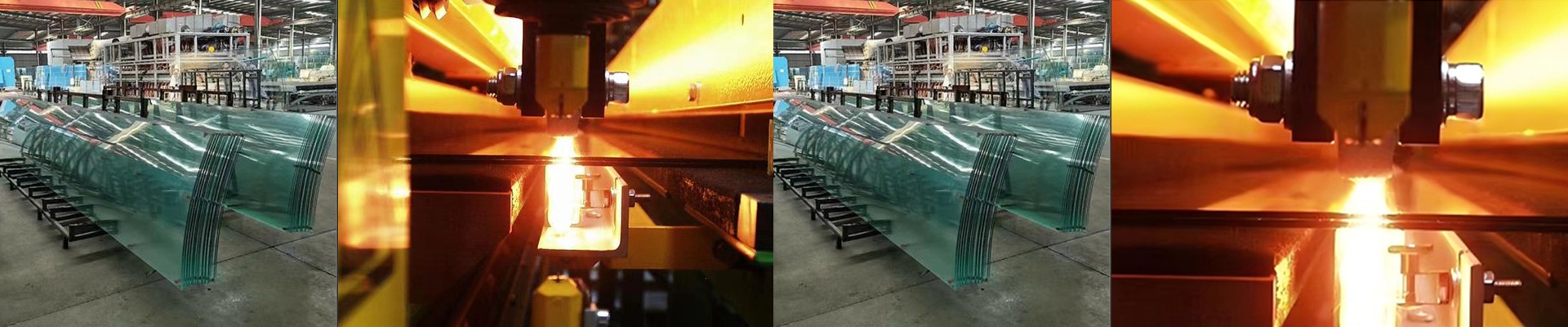

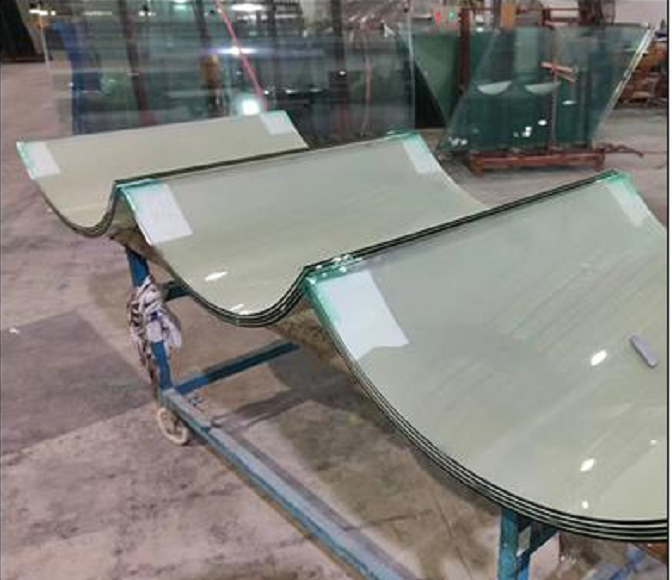
On the glass line, the oven is where the heat does the heavy lifting—tempering, bending, lamination preheat, coating drying. But heat only pays off when you pull it off fast and even. If the cooling drags, the whole schedule slips. If the quench is off, you pay for it in stress marks, optical distortion, and scrap. We built this cooling fan for glass ovens to give you repeatable, controllable heat removal—so the oven cycle doesn’t run your yield.
What matters under the hood
This isn’t a standard fan. It’s a cooling module engineered to live inside the oven’s thermal envelope, without adding noise, vibration, or airflow you can’t count on.
- Airflow and pressure: It pulls high static pressure with tightly controlled airflow, so it pushes through dense ducting, heat exchangers, and oven plenums without the flow collapsing. Uniform quench comes down to consistent velocity across the glass surface.
- Temperature rating: Components are rated for continuous operation with elevated ambient between cycles. Bearings, seals, and housings are chosen to avoid thermal runaway and keep clearances at temperature.
- Control compatibility: It integrates cleanly with existing oven control logic—speed control via 0–10 V, 4–20 mA, or PLC/bus options. That lets you match the cooling profile to the glass: fast quench for tempered, gentler cooling for coated or laminated stacks.
- Efficiency and power density: We size the motor and impeller for the glass-oven duty cycle—high performance at high temperature, without oversizing that drives up energy use. You get lower current draw per unit of heat removed.
- Uptime build: Sealed housings, high-temperature bearings, and corrosion-resistant materials cut the wear that shows up as drift, noise, and eventual failure. Fewer unplanned stops, less maintenance labor.
Why it works where glass ovens live
Glass ovens are punishing. The heating side is sized to hit temperature quickly; the cooling side has to keep pace to lock in the microstructure and shape you need. If the cooling isn’t predictable, three things show up on the board. Energy use. When the oven can’t shed heat fast enough, the heating system spends more time holding temperature and compensating for thermal lag. A properly matched cooling fan shortens the soak-and-cool window, reduces hold power, and tightens cycle time. That lowers kWh per piece—often enough to notice on the utility bill. Yield. Tempering and bending live and die on uniform quench. Uneven cooling creates thermal stress that shows up as breakage, bow, and optical defects. Coated and laminated products are even less forgiving; cooling rate affects edge quality and bond integrity. When the airflow is uniform across the load, scrap and rework drop. That kind of yield gain pays for itself quickly. Maintenance cost. Ovens run hot, and heat kills motors and bearings fast if the cooling module isn’t built for it. You see fewer field failures when the fan is designed for the oven environment, not adapted from a general-purpose unit. Fewer spares on the shelf, fewer service calls, and less unplanned downtime. On one line we measured, adding a correctly sized cooling fan cut cycle time on a tempering run and reduced oven energy draw during cooling. The plant ran more pieces per shift without adding oven runtime, and scrap tied to quench nonuniformity fell. That’s how cooling performance turns into throughput and yield.
What to check before you spec
Cooling performance depends on the oven as a system, not just the fan. Before specifying, confirm ducting layout, plenum pressure drop, and the oven’s maximum temperature during cooling. If the ductwork is undersized or the path is long and tortuous, the fan hits its pressure limit before you get the airflow you need. In those cases, we adjust impeller selection and housing strength to match the system curve. Mounting and clearance matter. The fan needs stable mounting points and room for intake and exhaust. Restricted intake raises motor temperature and cuts airflow; exhaust backpressure robs performance. Plan for clean access for inspection and cleaning—oven dust and particulate build up over time. Control tuning is part of the job. The best results come when fan speed matches the oven recipe—fast quench for thick tempered glass, controlled cooling for coated products. If your oven control supports multi-step profiles, you save energy by running the fan only when needed and at the right speed. **The fan isn’t a fix for a bad oven design.**If the oven has hot spots, poor recirculation, or insufficient heat exchange capacity, the fan will help, but it can’t erase a fundamental thermal imbalance. We treat it as a joint review: match the fan to the oven, and tune the oven to the process. If your oven is running hotter than it should, if the quench is uneven, or if cooling components keep pulling you off schedule, a glass-oven cooling fan is a practical upgrade. It’s about pulling heat out on purpose, on schedule, and on spec—so your glass comes out flat, strong, and on time.