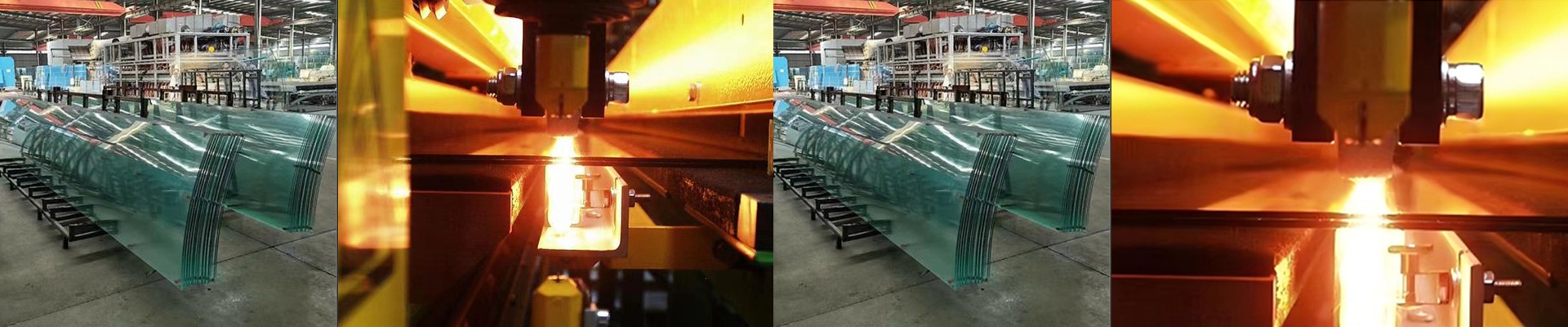
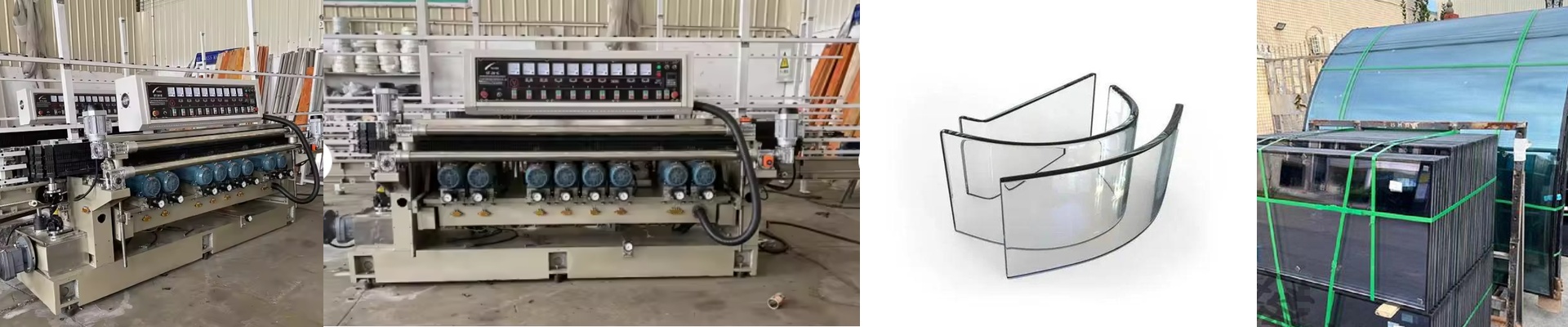
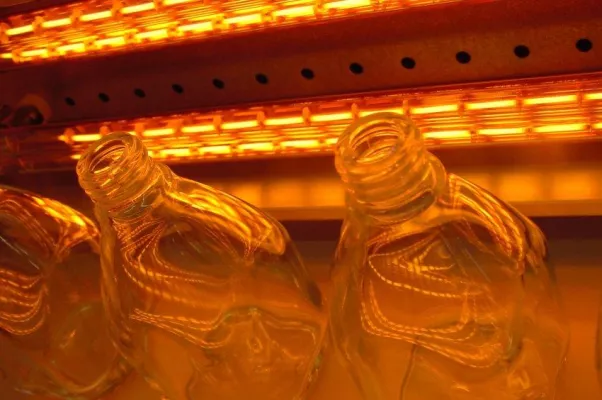
On the bending line, timing is everything. If the heating profile drifts or the thermal field isn’t even, you’re looking at shape drift, optical distortion, and scrap that should have shipped. We built this lamp to hit repeatable thermal targets, shift after shift. What matters under the hood We run a quartz short-wave infrared emitter tuned for glass, giving us a 6°C/s ramp from ambient to operating temperature and 1.5 kW/m² power density for fast, direct energy transfer. Reflector geometry and zone control keep temperature uniformity within ±2.5°C across the target area, so the glass sees a stable thermal profile instead of hot spots and cold edges. Response is immediate—no warm-up lag—and output stays steady over long runs. We’ve got units that have run 5,000+ hours with less than 5% output drop. Here’s why it sticks where convection ovens stall: quick changeovers, tight tolerances, and mixed batches. The lamp brings heat to the glass on demand, shortening cycle time and cutting energy use per part. A uniform field reduces thermal stress during bending, which improves optical quality and lowers rework. As a drop-in module, it integrates with existing bending stations and control systems, so you get repeatable profiles without re-engineering the line. A few shop-floor realities. The lamp performs best with clean, dry air and stable supply voltage. In high humidity, expect a 10–15% derating unless the enclosure is sealed and purged. Installation is straightforward, but keep emitter-to-glass distance fixed within 1 mm to maintain uniformity. We include a simple jig to set it once and lock it.